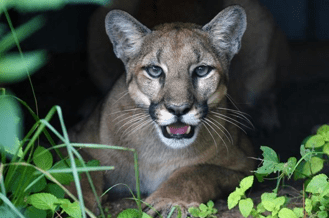
Florida, USA is home to a few beautiful big cats, but one of those cats is on the precipice of extinction. The Florida panther is the last remaining puma in the Eastern Hemisphere, it is also the most endangered mammal in the Eastern Hemisphere.[1] The panther was first listed as an endangered species in 1967, and then ultimately included under the Endangered Species Act of 1973.[2] The panthers’ population has increased from a devastatingly low number of approximately twenty in the 1970s, to approximately 250 today.[3] However, some sources indicate that the number of panthers in Florida is quite lower, approximately 150.[4] Under the Florida Panther Recovery Plan, a Genetic Restoration Plan was implemented in 1995 to help revive the panthers’ population. The panther population did successfully increase under the plan, however, not by much. The Genetic Restoration Plan took eight “Texan” female pumas, the closest puma population to Florida, and introduced the ladies to the Floridian pumas’ habitat. As a result of this introduction, five of the eight females produced a total of twenty kittens, which was a huge success.[5] However, shortly after another hurdle was soon realized, lack of space.
“Big Cats Need Big Space”
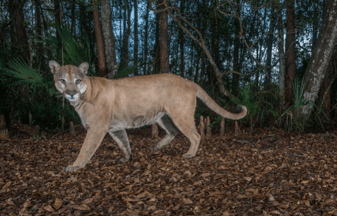
“Big Cats Need Big Space” is the slogan on the Big Cypress National Preserves website, informing its readers of one of the panthers’ biggest hurdles for recovery.[6] The Florida panthers’ habitat once spanned as far north as Arkansas and as far East as South Carolina.[7] However, human beings have encroached on the big cats’ habitat so much, that only around five percent of its habitat remains today in South Florida.[8] Just like my house cats, Florida panthers are very territorial and fortunately for me, my house cats don’t need as much space as the panthers do. A male panther needs roughly 200 square miles of space to breed, roam, hunt and rest, while the average female panther needs approximately 75 square miles.[9]Under the current Recovery Plan, relocation efforts are being made to establish a larger habitat for the Florida panther, even if that means outside of Florida.[10] However, the continued expansion of human infrastructure, coupled with the fear of big cats walking into a residential backyard, creates challenges in these efforts.[11]
Why Does Any of This Even Matter?
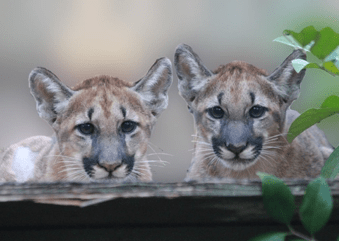
The Florida Panther is a keystone species, meaning that its existence in the wild has a trickle-down effect on the population of its prey, which when left unchecked by a predator, can cause an explosion in the population size of many rodents, deer and other prey considered to be pests to humans.[12] Not to mention, the Florida panther is Florida’s official state animal, and we should honor her on our state’s flag, not as a memorial, but as a symbol of life and beauty that we were able to protect from our destructive behavior as a society. Animals have no voice but ours, and if we don’t speak on their behalf to ensure their inclusion in our plans of future developments that benefit society and the human race, then we risk losing them all.
“When we lose an animal species, we lose part of our family.”
– Anthony Douglas Williams
What Can I Do To Help, You Ask?
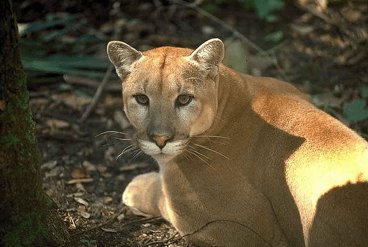
The first step was taken already. You read this blog. The second step is even easier, tell a friend, a family member or even a stranger what you’ve learned about the fate of Florida’s official state animal. Big Cat Rescue also offers a list of suggestions that everyday people can do to help save the Florida panther. For example, just helping others become educated about the nature and habitat of the animal and the role it plays in the ecosystem makes a difference, or even creating a school project about the Florida panther helps the cause. Whatever action you take, you will be aiding in the cat fight to help protect Florida’s panther, so keep those claws out and let’s pounce into action!

 Barry Law Environmental and Earth Law Journal
Leave a comment