When I first heard about minimalism, I thought about how it was a ridiculous lifestyle that was highly unattainable and impractical. I had seen the videos of vloggers sharing how they fit all of their possessions in a single backpack or how they were able to put a year’s worth of trash in one mason jar. I admired their commitment to the lifestyle but knew that it was something I would never be able to do myself. However, still being intrigued by this lifestyle, I did further research and realized I could actually participate in this lifestyle, even if not to the same lengths.
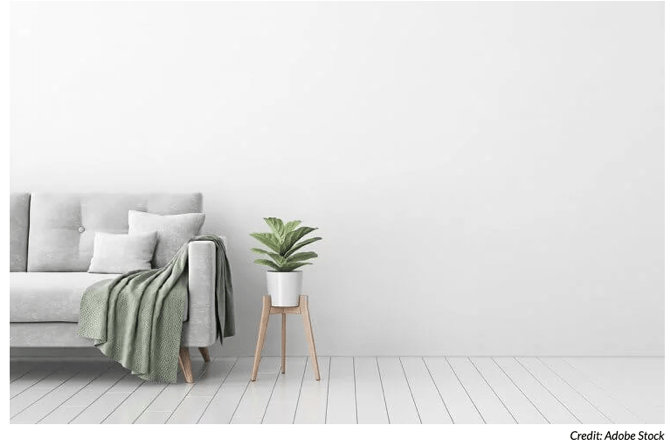
I learned that the minimalist lifestyle was more than a simple, neutral-colored aesthetic: it was a powerful movement capable of making significant changes in individual lives and the environment. At its core, minimalism rejects consumerism and advocates simplicity [1]. The minimalist lifestyle is often reflected in forms of sustainable living, reduction of carbon footprint, and the rejection of consumerism; all of which benefit the environment. Embracing the minimalist lifestyle does not mean that everyone should get rid of their possessions and only live with what is necessary to survive. It does not mean that houses should be stripped of all décor and that every wall needs to be white with only a single succulent plant in sight. The broadness of the minimalist definition makes it so that each individual can create his or her own lifestyle according to the needs and specifications of each person. For some, minimalism can mean decluttering their homes of items that are superfluous or don’t have any sentimental value. For others, it can mean living in a tiny home or only owning one set of everything. While there is no all-encompassing definition, the range of the minimalist lifestyle is broad enough so that everyone can find and aspect of it that they can implement in their daily lives.
I thought the minimalist lifestyle could never be for me because it seemed too extreme. I’ve realized I was wrong. I can easily do my part in helping the environment by implementing characteristics of the minimalist lifestyle in my everyday life. For example, sustainable living doesn’t necessarily mean living in a tiny home; it can mean using energy-efficient light bulbs or carpooling [2]. Minimalism can also mean being conscious about my carbon footprint. The carbon footprint is a measurement of an individual’s impact on the environment via carbon-producing activities in the home, transportation, and waste [3]. I can work to reduce my carbon footprint by doing easy tasks such as unplugging devices, eating local, and being aware of how much waste I am producing. Minimalism also seeks to cut down on everyday consumption. To accomplish this, I could repurpose items around the house and not give in to all the “fast fashion” trends.
While we are all free to choose our lifestyle, there is no denying that our high consumption and waste rates are having a direct negative effect on the environment [4]. Rising temperatures and extreme climate events are happening because of the high rates of greenhouse emissions and rising levels of carbon dioxide, all caused by human activity [5]. There are not enough resources to sustain the consumerist lifestyle that we are living now [6]; it is our duty to preserve our resources and conserve the Earth before it’s too late. Individual behaviors are at the core of environmental issues but they are also the potential solutions [7]. The minimalist lifestyle is a great way to not only live more consciously but to participate in global change within our individual homes. Will you be a part of the movement?
Written by:
Crisol Lopez Palafox
Associate Editor, EELJ
 Barry Law Environmental and Earth Law Journal
Leave a comment