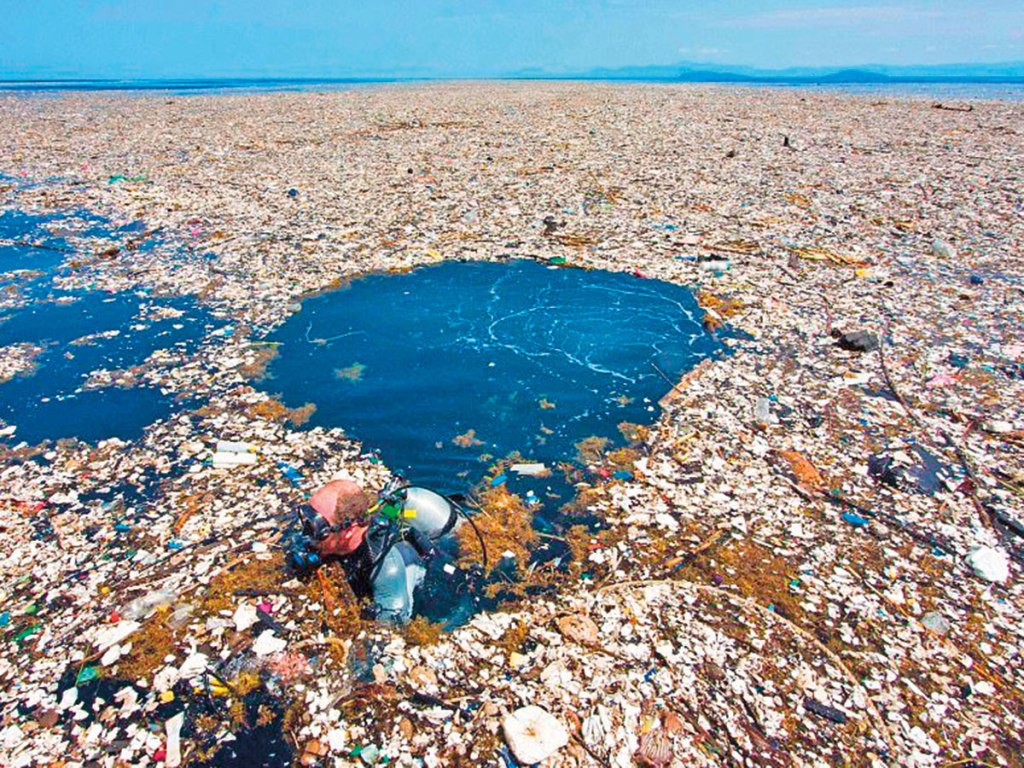
Off the coast of California and extending all the way to Japan exists the Great Pacific Garbage Patch. [1] The Great Pacific Garbage patch is not just one sole patch of garbage in the ocean as the name may allude to, but multiple patches of marine debris dispersed across the Pacific Ocean. [2] Marine debris consists of litter and other manufactured or processed materials that have made their way into aquatic environments. [3] Plastic is one of the most common and harmful types of marine debris that can be found throughout the Earth’s oceans, specifically in the Great Pacific Garbage Patch. [5] This abundance of marine debris, specifically plastics, in the Pacific Ocean poses a substantial threat to marine life as well as human life. [6] Fish, birds, sea turtles, and marine mammals can become entangled in these materials, suffocate, starve and drown because of the estimated 13 million metric tons of plastic that end up in the ocean each year. [7] When these materials are ingested by fish and partially broken down, small particles of plastic can actually end up in the seafood ingested by humans. [8] The plastics, specifically those found in seafood, come from clothing–due to around half a million tons of microfibers from clothing entering the ocean annually. [9] Plastic, as the world knows it, poses a threat to the marine environment as well as human consumption, but there are alternatives that have the potential to alleviate these threats; bioplastics.
Bioplastics are biodegradable materials that come from renewable resources and break down within three to six months.[10] Petroleum-based plastics, which make up the majority of the Earth’s plastic waste, can take 500 to 1000 years to break down and are forged using non-renewable fossil fuels. [11] There are only a few companies that have invested in creating bioplastics, specifically using hemp, however, this area of production is on the rise. [12] Hemp is a renewable resource and can be grown in great quantities for the purpose of creating biodegradable alternatives to replace everyday plastics that end up in the ocean. [13] The Plastic Hemp Company is one example of a company that is taking the lead in bioplastics and creating biodegradable replacements for everyday items such as pens, coolers, bowls, jars, and even automotive parts. [14] In addition to the reduction in the use of petroleum-based plastics that pollute oceans, the growth of hemp is also beneficial in that it reduces soil erosion. [15] Another company that invests in the use of hemp to replace petroleum-based plastics is Toad and Co. [16] Toad and Co. is a hemp-based clothing brand focused on creating durable and biodegradable items that won’t contribute to pollution caused by the plastics found in the majority of clothing. [17]
Hemp-based bioplastics present a viable option for reducing pollution created by single-use plastics that disrupt marine life and span oceans, however, it is more expensive to purchase hemp-based products and they must be disposed of properly to see a positive environmental effect. [18] The reason hemp-bioplastics are more expensive is due to the process of creating them being energy-intensive, however with more funding for these products the price has the potential to decrease. [19] Despite the high cost of these products, the production and use of them over petroleum-based plastics have numerous environmental benefits aside from curbing plastic pollution. [20] The additional benefits of using hemp include water conservation and reduction in carbon emissions. [21] The cultivation of hemp captures carbon emissions from the atmosphere, removing about 1.63 tons of carbon from the air for every ton of hemp produced. [22] Production of petroleum-based plastics includes the extraction of oil which releases harmful pollutants in the air making it more dangerous to breathe. [23]
Bioplastics are on the rise and present as a solution to water and air pollution by replacing harmful production practices and effects that petroleum-based plastics have on the environment. [24]
Written by Danielle Zito, EELJ Associate Editor
 Barry Law Environmental and Earth Law Journal
Leave a comment