The Great Barrier Reef is the largest collection of coral reefs on Earth. This reef is home to 400 types of coral, 1,500 species of fish, and 4,000 types of mollusks. [1] However, the importance of the Great Barrier Reef extends far beyond its marine life, The Great Barrier Reef is also one of the largest carbon sinks in the world. [2] Its mangroves and seagrasses absorb carbon from the atmosphere and store it, cleaning our air and helping mitigate the effects of climate change. [3] An essential part of sustaining the Great Barrier Reef occurs at an island near the northern tip of the Great Barrier Reef named Raine Island.
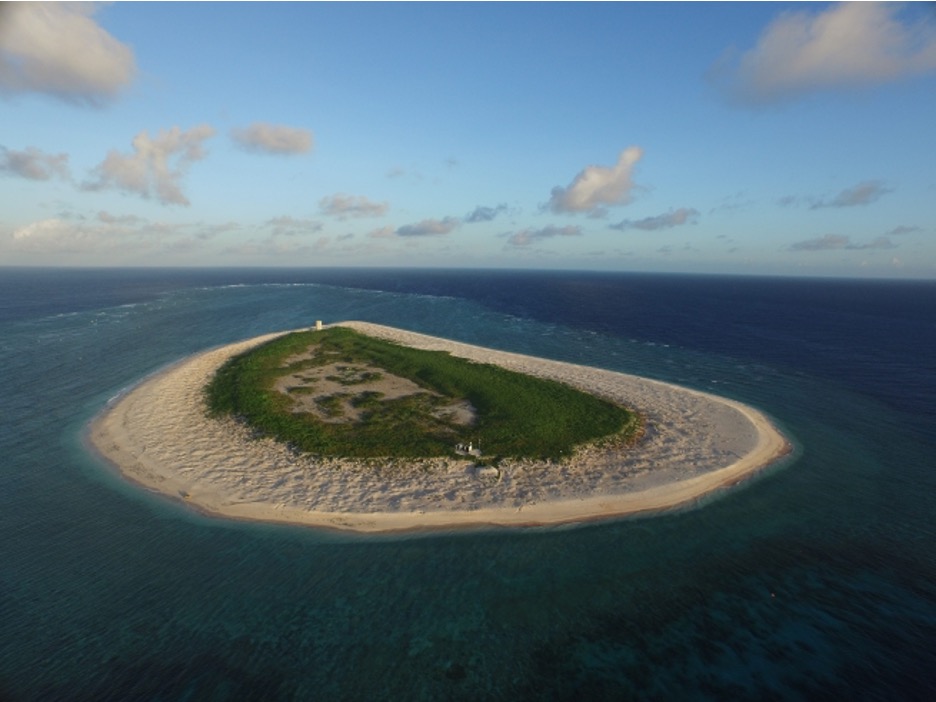
Raine Island is a mere 79 acres but holds immense environmental value. This one island is the birthplace of 90% of the Great Barrier Reef’s northern green turtle population (Chelonia mydas). [4] It has been reported that more than 64,000 green turtles in one nesting season use this island to lay their eggs. [5] The green turtles are essential to the great barrier reef ecosystem because they are the only herbivorous marine turtle that feed on the seagrass and algae of the reef. [6] By grazing these beds, the turtles prune and fertilize the seagrass beds which allows other fish and marine species to thrive and provides nurseries for these other marine species. [7]
However, this species of turtle is in grave danger of extinction. For over 30 years, scientists watched the decline of the northern Great Barrier Reef’s green turtle population by way of flooded nests, with many eggs drowning. [8] These flooded nests led other turtles to return to the sea unable to enjoy a safe nesting place. [9] This is in large part due to the changes in the island’s landscape which have caused tidal inundation. [10] Additionally, this landscape change has caused as many as 2,000 adult turtles in a season to die from overturning and entrapment in rocky cliffs and from heat exhaustion on the nesting beach. [11]
Given this island’s major environmental importance for the ecosystem of the Great Barrier Reef, conservation efforts are essential to ensure the future stability of this phenomenon. Current efforts include the Raine Island Recovery Project. [12] This project is a collaboration between the Queensland Government and Australian Government and the Wuthathi People and Meriam Nation (Ugar, Mer, Erub) People to re-establish Raine Island. [13] This project aims to help save the endangered green turtle through a variety of different measures. These measures include restoring the island turtle nesting habitat through beach re-profiling, monitoring key island species, and building Indigenous ranger capacity. [14] As a result of these efforts, turtles are spreading out when nesting on the re-profiled section of the beach, there is reduced disturbance from other turtles while laying eggs, and nests are now laid above inundation level which has prevented countless eggs from flooding. [15] Additionally, over 1,100 meters of fencing have been installed on top of cliffs and beach rocks in an effort to reduce mortality of nesting female turtles from cliff falls, flipping over on their back, and getting trapped in beach rock. [16] These fences have already prevented an estimated 400 turtle deaths alone and continue to prevent these nesting female turtles from getting stuck or death. [17]
However, this species of turtle is in grave danger of extinction. For over 30 years, scientists watched the decline of the northern Great Barrier Reef’s green turtle population by way of flooded nests, with many eggs drowning. [8] These flooded nests led other turtles to return to the sea unable to enjoy a safe nesting place. [9] This is in large part due to the changes in the island’s landscape which have caused tidal inundation. [10] Additionally, this landscape change has caused as many as 2,000 adult turtles in a season to die from overturning and entrapment in rocky cliffs and from heat exhaustion on the nesting beach. [11]
Given this island’s major environmental importance for the ecosystem of the Great Barrier Reef, conservation efforts are essential to ensure the future stability of this phenomenon. Current efforts include the Raine Island Recovery Project. [12] This project is a collaboration between the Queensland Government and Australian Government and the Wuthathi People and Meriam Nation (Ugar, Mer, Erub) People to re-establish Raine Island. [13] This project aims to help save the endangered green turtle through a variety of different measures. These measures include restoring the island turtle nesting habitat through beach re-profiling, monitoring key island species, and building Indigenous ranger capacity. [14] As a result of these efforts, turtles are spreading out when nesting on the re-profiled section of the beach, there is reduced disturbance from other turtles while laying eggs, and nests are now laid above inundation level which has prevented countless eggs from flooding. [15] Additionally, over 1,100 meters of fencing have been installed on top of cliffs and beach rocks in an effort to reduce mortality of nesting female turtles from cliff falls, flipping over on their back, and getting trapped in beach rock. [16] These fences have already prevented an estimated 400 turtle deaths alone and continue to prevent these nesting female turtles from getting stuck or death. [17]
Although these recent efforts have shown promise for sustaining the green turtle population at Raine Island and the Great Barrier Reef, the effort must continue. Without these vital creatures not only is the Great Barrier Reef at great risk of seeing a major decline in its ecosystem, but the world as a whole may be left to suffer the consequences due to extinction of the northern green turtle.
Written by Andrew Garcia, Associate Editor 2022-2023
 Barry Law Environmental and Earth Law Journal
Leave a comment