Florida Springs are natural treasures and vital resources that provide ecological, economic, recreational, and cultural benefits, while also supporting diverse ecosystems, and serving as clear windows into the health of the Floridan aquifer, which is a crucial source of drinking water for residents. [1] However, these springs face numerous challenges, including pollution, declining flows, ecological imbalances, excessive groundwater pumping, and unsustainable agricultural practices. [1] [2] [3] Overall, current environmental laws and enforcement measures have not been fully effective in addressing these issues. Thus, it is time to delve deeper into the environmental laws related to Florida Springs and the potential solutions, focusing on the “Outstanding Florida Springs” and the specific cases of Weeki Wachee Springs, Wekiwa Springs, and Ginnie Springs.
CHALLENGES
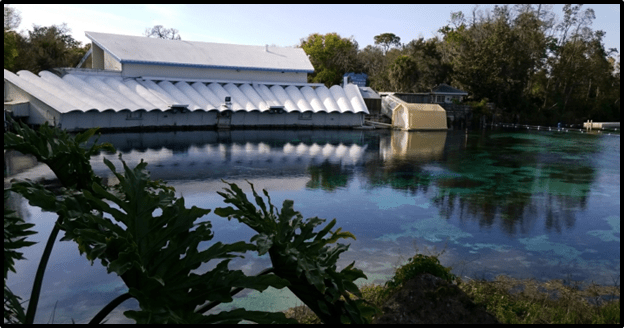
Florida’s springs face numerous challenges, including potential decreases in flows, elevated nitrate levels, altered aquatic vegetation (including invasive species), and changes in groundwater levels, and pollution – especially from nitrates. [4] [5] Shockingly, more than 80 percent of Florida’s 1,000-plus artesian springs are suffering from declining flows and increasing nutrient pollution. [6] Nitrate pollution is contributing to the loss of spring habitats, which can adversely affect local economies relying on springs tourism. [5] Some other significant causes of impairment include groundwater pumping by businesses and cities and excessive recreation. [7] Unfortunately, these problems are not new or unique because they have been documented by Florida’s governmental scientists for at least 25 years. [6]
OUTSTANDING FLORIDA SPRINGS
In 2016, the Florida Legislature identified 30 springs as “Outstanding Florida Springs” (OFS), requiring additional protections to ensure their conservation and restoration. [8] [9] [10] These springs, including Weeki Wachee Springs and Wekiwa Springs, are recognized for their significant natural, recreational, and economic values. [11] [12] Oddly, Ginnie Springs did not make this list, but rather was encapsulated into the Santa Fe River’s “Outstanding Florida Waterway” (OFW) designation. [13]
THE SPRINGS
In July 2023, Weeki Wachee Springs finally saw the establishment of a Spring Protection Zone. [14] [15] This zone restricts beaching, mooring, anchoring, and grounding of vessels on the spring run of the Weeki Wachee River. [14] [15] This protection zone aims to prevent harm to the bank, vegetation, native habitat, and aquatic grasses in and around the spring and along the spring run. [16]
In contrast to Weeki Wachee Springs, Wekiwa Springs lacks a Spring Protection Zone. [17] Despite the establishment of the Wekiva River Protection Area in 1988 and the setting of Minimum Flows and Levels (MFLs) in 1992, Wekiwa Springs and its associated spring runs continue to suffer from elevated nutrient concentrations and declining spring flows. [17] The state’s efforts to protect the Wekiva River basin, which includes Wekiwa Springs, have been described as a “case history in futility.” [17]
Ginnie Springs, on the other hand, is privately owned and again technically lacks the designation of being an OFS, but has been at the center of a controversy involving Nestle’s water extraction activities, despite the company’s name change. [18] [19] The ongoing lawsuit raises important questions about the balance between commercial interests and environmental protection. [19]
CURRENT LAWS
The existence of environmental laws aimed at protecting Florida’s springs have not fully alleviated the problems facing the springs, such as the Florida Springs and Aquifer Protection Act (FSAPA) created in 2016, which has been criticized for its deficiencies in implementation and lack of enforcement. [12] [20] The Act was intended to address problems due to pollution, declining flows, ecological imbalances, and activities within the surrounding areas of the springs, which are the same issues the springs still face. [12] Thus, critics argue that the state has taken little action to stop local governments and big businesses from over-pumping freshwater out of the Floridan Aquifer. [20] After a 2019 lawsuit with a gloomy verdict, the First District Court of Appeals finally reversed in February 2023, stating that the Department of Environmental Protection (DEP) did not follow law when creating the Basin Management Action Plans (BMAPs) for four of the OFS, and requires the DEP to now be more specific in its BMAPs on how it will reduce nitrate pollution, and must say who is responsible. [21]
PROPOSED SOLUTIONS AND ACTIONS
Addressing the challenges facing Florida’s springs requires a multi-layered approach. To start, the Florida Springs Council has recommended a policy that would not allow permits for pumping water around struggling springs unless applicants reduced their usage or bought out other permits to lower the amount of water pulled from the aquifer overall. [20] At the federal level, the government could provide more funding for springs protection and restoration. [9] At the state level, the Florida Department of Environmental Protection (FDEP) should strengthen its enforcement of existing laws and regulations. [22] At the local government level, management plans tailored for each spring system could be developed in collaboration with other local, regional, and state agencies. [23] These plans could include further restoration, regulation, research, monitoring, and education. [23] At the in-home level, individuals can also play a role in protecting Florida’s springs by properly disposing of hazardous materials, avoiding activities that could harm springs and surrounding ecosystems, such as mooring on river shorelines, and by reducing their water and fertilizer usage, and other sources of nitrogen pollution, which can contaminate groundwater and contribute to the degradation of springs. [9] Further, individuals can join Friends organizations, such as the Friends of Weeki Wachee Springs, and the Friends of the Wekiva River, which actively offer opportunities to participate in education, advocacy, and conservation efforts. [24] [25]
Thus, while Florida’s springs face many significant challenges, and legal avenues are not always clear or comprehensive, there are also opportunities for improvement. By strengthening environmental laws, implementing effective protection measures, and encouraging community involvement, it is possible to protect and safeguard these natural treasures for future generations.
Written by Hannah G. Smith, Associate Editor 2023-2024.
 Barry Law Environmental and Earth Law Journal
Leave a comment