Oct. 6, 2024
Ag-Gag Laws Explained
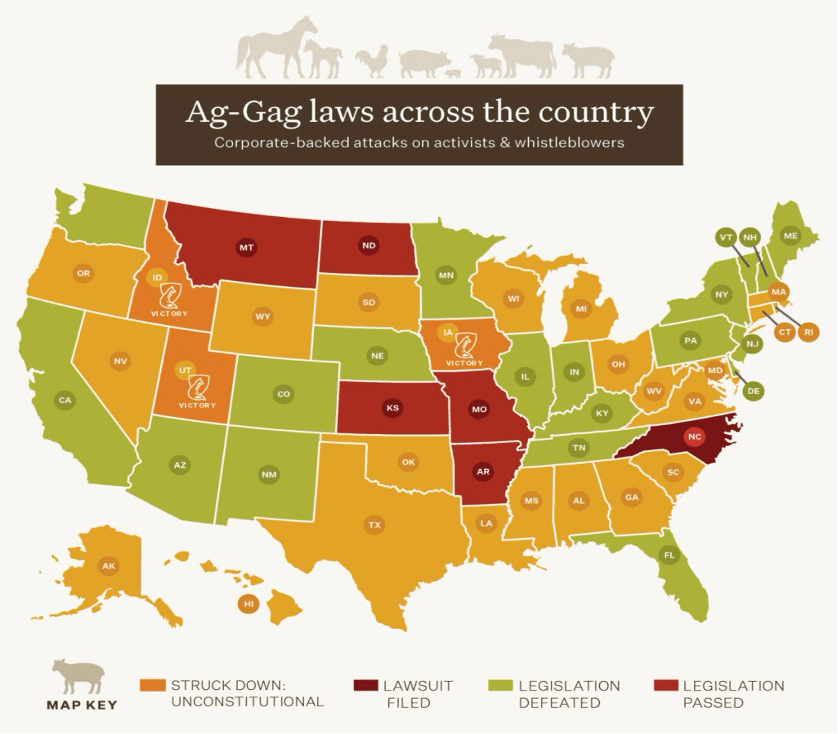
What are Ag-Gag Laws? Ag-Gag Laws are laws enacted in various states that forbid undercover videos or photography of activity on factory farms and slaughterhouses without the consent of the owners. [1] Animal rights activists or whistleblowers frequently conduct undercover investigations and illicit recordings within agricultural operations to uncover unethical or unlawful actions; these laws are intended to punish these activities. [2] As of 2023, Arkansas, Iowa, Missouri, Montana, and North Dakota have Ag-Gag Laws in place. [3] The laws have been overturned in some states, subsequently determined to be unconstitutional, or are still being contested. [4] There continues to be an ongoing challenge for the courts and legislatures on how to balance the right to free speech, press, whistleblowing, and animal rights against the protection of private property and agriculture industry practices.
The Agriculture Industry’s Claim to Protection
The Agriculture Industry’s Claim to Protection
Ag-Gag Law proponents contend that their protection of the agricultural industry from trespassing, financial loss, and deceptive statements by activists and investigative journalists is a vital function of these laws. [5] They contend that undercover footage from activists frequently portrays a distorted view of farming methods, picking out the worst incidents to build a story of widespread abuse that is not genuine to the sector. [6] Additionally, Pro Ag-Gag supporters make a public safety argument, which holds that protecting the security of the farms where food is produced is essential to maintaining the integrity of the country’s food supply. [7] The Ag-Gag Law proponents continue to argue the need for Ag-Gag Laws to protect the agricultural industry from deceptive media coverage, financial loss, private property, and possible dangers to the safety of the country’s food supply.
The Impact on Animal Cruelty Activists
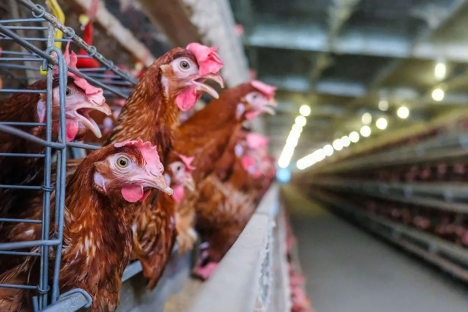
On the other hand, animal activists contend that the sole purpose of Ag-Gag Laws is to conceal instances of animal abuse, poor working conditions, or unsanitary practices from the public. [8] Animal activists highlight that the agriculture industry enjoys protections through Ag-Gag Laws that are not offered to other industries. [9] Animal activists have uncovered severe mistreatment in factory farms, and much of what the public knows about these conditions comes from undercover investigations. [10] For decades, these investigations have been instrumental in exposing inhumane practices within the animal agriculture industry. [11] Animal activists contend that in the end, Ag-Gag laws work to diminish openness and shield the public from seeing unethical actions in the agriculture industry.
Balancing Competing Freedoms
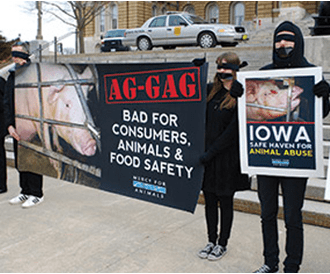
While the agriculture industry argues that its freedom to operate without interference is protected by Ag-Gag Laws, these laws simultaneously restrict the freedoms of those who seek to hold the industry accountable. [12] Animal activists argue that the laws are a violation of their First Amendment right to free speech. The First Amendment protects the freedom of speech, which includes the right to gather information on issues of public concern. Due to their restriction on certain content, many Ag-Gag regulations that forbid filming or recording in agricultural settings are subject to First Amendment issues. [13] The farming industry claims that their private property is protected by Ag-Gag Laws. But a straightforward anti-trespassing statute can more readily and directly defend private property from trespassing. [14] As a result, the court in many states debate whether or not Ag-Gag Laws are constitutional.
Cases on the Issue
In 2023, a few states declared the laws to be unconstitutional, while in other states, the courts continue to dispute the law. [15] For instance, North Carolina has been examining the matter in the U.S. District Court for the Middle District of North Carolina and U.S. Court of Appeals for the Fourth Circuit. [16] In 2015, the legislature of North Carolina enacted the “Property Protection Act,” also referred to as a “Ag-Gag” law, which forbade undercover operations that documented working conditions, particularly factory farms. [17] Additionally, the statute permitted property owners to seek monetary damages from undercover agents and whistleblowers. [18] In an attempt to challenge the constitutionality of the law, PETA, the Animal Legal Defense Fund, and other advocacy groups sued in federal district court. [19] Animal activists argue the law infringes against their First Amendment right of free speech with respect to “newsgathering activities”. [20] In a major success for animal advocates, the U.S. District Court for the Middle District of North Carolina found that the law was unconstitutional. [21] Subsequently, animal advocates scored another victory when the U.S. Court of Appeals for the Fourth Circuit declared that newsgathering activities such as undercover work and whistleblowing are protected by the First Amendment. [22] Animal advocates gained yet another victory in their fight against to Ag-Gag regulations when the Supreme Court declined to consider the case. [23]
Conclusion
In conclusion, Ag-Gag Laws continue to be an issue of debate as they limit activists to expose unethical practices by the agriculture industry, while simultaneously seeking to protect the agriculture industry from undercover investigations. Animal rights activists, contend that Ag-Gag laws violate First Amendment rights by suppressing free speech, ultimately concealing animal abuse and unsafe conditions within the agriculture industry. These undercover investigations by animal activists have resulted in reports of animal maltreatment and unethical agricultural practices. The ongoing debate highlights the challenge of balancing industry protection with public accountability and animal welfare.
Written by Madelyn Cardinal, Associate Editor 2024-2025.
 Barry Law Environmental and Earth Law Journal
Leave a comment