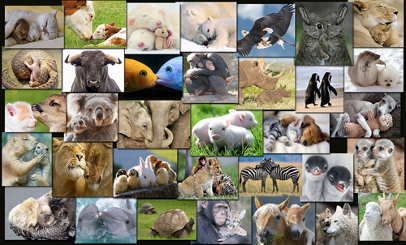
Undoubtedly the spread of COVID-19 throughout the world in 2020 has presented numerous challenges, to say the least. On Wednesday, November 11, 2020, the United States, unfortunately, set a new record for coronavirus daily cases, with 140,543 reported [1]. This disease is persistent, but the expectation of a vaccine keeps us hopeful for better days [2]. Back in May, when I saw on the news that a tiger at a zoo in New York tested positive for COVID-19 I started worrying about my little pooch at home [3]. Furthermore, I started to think about animals in zoos, shelters, sanctuaries, rescues, etc. How are these animals enduring the pandemic? How are animal care organizations able to provide for animals in their care when dealing with shutdowns and social distancing? Well, my curiosity led me to pursuit answers, and I started researching on the subject [4]. Then, I decided to write to some organizations directly. I have received mainly good news, but some were bad.
Zoos across the country have laid off or furloughed most staff members keeping only essential ones that care for animals [5]. Nashville Zoo [5] suffered a significant revenue loss, said Jim Bartoo marketing and public relations director. “We had to cancel special events, fundraisers, summer camps, educational programming, and other revenue streams resulting in a giant revenue hole,” Bartoo said. Relating to animals, Bartoo stated that, keepers that worked with animals at a higher risk of catching the virus had to alter their care program to lessen close proximity and contact.
An analogous situation encountered by ZooMontana [6], that also had to cancel events, resulting in a loss of over $250,000 in revenue, said executive director Jeff Ewelt. “This was concerning, to say the least, especially when 100% of our revenue dried up,” Ewelt said. ZooMontana, like any other zoo, continued to incur operational costs when closed.
Similarly, to reduce operating costs Santa Barbara Zoo [7] laid off all non-essential part-time staff and a few non-essential full-time employees, but kept all animal care and health employees because they are classified as essential, said president and CEO Rich Block. During a normal year Santa Barbara Zoo spends about $1 million per month on all expenses; this year, through lay-offs and cutting non-essential expenses, they were able to lower monthly expenses to roughly $600,000, Block explained.
Although every zoo that I communicated with reported revenue loss during shutdowns, all had maintained animal care a top priority and said that the support of the community was also key to their successful come back. “Due to strong visitation post-opening and a very successful donation appeal, we will end the year in the black without touching our operating reserves,” said director Sue Wahlgren of Cosley Zoo. Community contributions helped to ensure that animals had their needs met, said assistant zoological manager Darren Minier of Oakland Zoo [8]. “We have also built a stronger relationship with the State of California to aid in relief efforts for wildlife and even rescued several animals,” said Minier. These answers put me somewhat at ease but I needed to hear from shelters, rescues, and animal sanctuaries because they are a different breed.
Like zoos, shelters and rescues faced similar revenue problems. “We have lost nearly all or revenue and donations during shut down,” said CEO Jill Davis of Animals Helping Humans & Humans Helping Animals [9]. Further, Davis said that there is a direct correlation of lack of socialization for dogs that cause them to be more fearful and reactive.
Another aspect that impacted most shelters and rescues was that they could not hold fundraising events. “We were not able to host our gala event which typically brings in 15% of our overall revenue for the year,” said executive director Katherine Gregory of Colorado Horse Rescue [10]. It “significantly impacted our revenue,” said Gregory. Similarly, executive director Chris Septer of South Florida SPCA Horse Rescue [11] said that “donations have dropped approximately 60%” and they are “experiencing real financial challenges.”
One more consequence shared among shelters and rescues is that most of them had to suspend volunteer programs. “We furloughed our entire volunteer staff in March and kept them away completely for nearly four months,” said executive director Christopher Soucy of The Raptor Trust [12].
But the coronavirus pandemic also triggered a positive effect for shelters and rescues [13]. “The positive outcome was that we gained new foster homes that marketed our animals to their friends, and on their social media channels, and we adopted 130 of those animals out to loving homes even while we were closed to the public,” said executive director Angie Friers of the SPCA of Brevard [14].
Furthermore, public relations director Karen Hirsch of LifeLine Animal Project [15] said that when they found out that quarantine would be happening they called for adopters and fosters, and this “resulted in over 1100 animals getting adopted or fostered in just one week.” “We found out that this happened at similar sheltering organizations nationwide,” said Hirsch. She also stated that her organization was selected as one of 14 pilot shelters to join the Human Animal Support Services (HASS), their goal is to implement the most successful ideas from animal welfare, social services, education, public health, and various other fields to create a whole new range of services to help pets and people stay together [16].
After hearing these great outcomes from the organizations that I communicated with, I realized that is not going to be COVID-19, or the lack of money, or fewer volunteers, or any other factor that will compromise animal care. There is always someone ready to extend a helping hand for a needy animal. Every organization that I talked to assured me that, although times are hard, they will survive. They all placed animal care as the highest priority and tailored their procedures accordingly. COVID-19 cannot, and will not, defeat us, our love for animals wins.
Written by Juan Torrico, EELJ Associate Editor


 Barry Law Environmental and Earth Law Journal
Leave a reply to Fabio Infeld Cancel reply