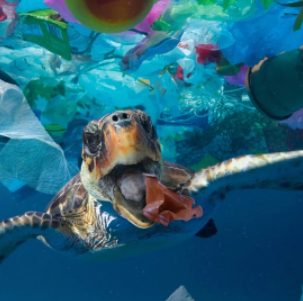
Have you ever used a plastic straw and wondered where it ends up when you’re done using it? What if I told you that plastic straw you just used to sip on your Starbucks drink, ended up in an ocean and a sea turtle mistakenly thought that straw was food and ingested it. Currently, seven different species of sea turtles swim the world’s oceans and have been around for 110 million years. [1] The ocean has been sheltering sea turtles since before mankind walked this earth and must now co-exist with numerous human-created threats. Over the years, it was assumed that the ocean was immune to human impact but evolving scientific technology has shed light on the devastating effects marine life has had to endure. [2]
There is an unbelievable amount of plastic waste taking over our oceans. [3] “Trash is being eaten by marine life and has entered every level of the food chain.” [4] “Plastic has been found in an estimated 90% of all seabirds and in all sea turtle species. Within the next decade there could be a pound of plastic for every three pounds of fish in the ocean.” [5] Sea birds, sea turtles, dolphins, and whales are among the most common marine life to die every year from starvation because the plastic fills up their stomachs when they mistake that plastic for food. [6] There is a myth that plastic straws are recyclable which solves the problem of plastic pollution, however, the very reason that plastic straws end up in our oceans, is because they are not recyclable. The recycling system is unable to sort plastic straws because they are so lightweight, causing them to mix with other small materials that get disposed as garbage, ending up in landfills, which eventually end up in our oceans. [7] The threat of plastic pollution poses a serious health risk to marine life, and it’s up to us to change the way we treat our oceans.
Currently, many parts of the U.S. are taking their own steps to reduce plastic pollution. Effective July 1st, 2018, plastic straws and utensils have been banned in Seattle, Washington. [8] Foodservice businesses in Seattle are prohibited from providing their guest with plastic utensils and must provide compostable packing for take-out food. [9] In 2019, the California legislature passed a bill that required restaurants to only provide straws upon request, however, the state law does not apply to fast-food restaurants nor coffee shops. [10] Unfortunately, Florida Governor Ron DeSantis declined to sign an environmental bill that would prohibit local governments from banning plastic straws for the next five years. [11] Even so, in 2019, the City of Miami joined other major cities in the plastic-free movement, and banned “single-use plastic beverage straws, stirrers and single-use plastic bags on the city’s beaches, streets, and prohibiting plastic bags from being distributed by sidewalk cafes, marinas, and other public places.” [12] Aside from major cities, there are still many states in the U.S. that do not have a plastic ban, which leaves marine life defenseless.
There are little changes one can make in their daily life that could reduce plastic pollution. Instead of using single-use plastic straws that are offered when you buy a beverage, replace the straw with a reusable metal straw or keep a pack of biodegradable straws in your car just in case you forget your metal straw at home. Buy reusable bags from your local grocery store and keep them in your car so you don’t forget them at home when it’s time to use them. If you’re tight on money and are unable to buy any reusable items, stores like Target and Ikea have specified bins that allow you to recycle household items such as, plastic bags, glass, and aluminum. Marine animals and your future self will thank you!
Written by Dayana Blanco, EELJ Associate Editor


Leave a Reply